
#24: back to school
bottoms and other iconic high school films

No major spoilers ahead for any of these high school movies! And I know it’s not back to school season anymore, but the original idea for this newsletter came to me in August/September, so here we are
In 2019, Lindy West published an essay titled “Is Adam Sandler funny?”. In it, she - a devout and life-long Adam Sandler fan - rewatches most of his filmography and asks whether his comedies actually serve their intended purpose. The essay, besides being a shining piece of comedy on its own, doesn’t pull its punches: “it’s hard to laugh at Sandler as an adult woman when you’re suddenly, painfully aware of how he helped shape the adult men around you”.
What it’s really interrogating is less Adam Sandler as a specific creative presence (although he was/is a dominant one) and more an entire era of film, particularly the 90s/2000s comedy. When I think of these movies - Billy Madison, Anchorman, The 40 Year Old Virgin - I think of a golden age for male, white comedians, many of whom continue to influence our culture today. As West points out, this era hasn’t always aged well. Its overt male focus, at the exclusion and objectification of the women included, seems like a product of a bygone time.
Even so, I have to say there’s something about this narrative that strikes me as reductive. I was born in the 90s and grew up during the 2000s, and maybe because I was younger than those films’ target audiences, those comedies aren’t the movies I remember. For me and many others my age, I was watching High School Musical, The Sleepover, Mean Girls, Easy A, etc. In retrospect, the fact that many of these iconic films were high school movies doesn’t escape me. And what’s even more obvious now is that the high school movies I was watching were functionally providing an alternate option to the Adam Sandler-version of comedy.
There’s clear overlap between the 90s/2000s comedy and the high school movie (American Pie, Superbad), but in contrast to traditional comedy, high school movies were actually often led by women. Despite the Ferris Buellers of the world, when I think of high school movies, I think almost exclusively of ones starring young actresses, many of whom would grow to become huge stars (Emma Stone, Amanda Seyfried, Kirsten Dunst, etc).
Hollywood perceives the successful woman-led comedy to be an unlikely thing (one of the reasons why Bridesmaids had such a cultural impact), but the truth is the high school genre was full of them. These films gave actresses the rare chance to be funny. And unlike the sex comedy, the high school movie continues to exist and influence film today. Sometimes, it feels like a genre that flies under the radar, far from the glow of critical acclaim, but it’s one that shaped generations of actresses and audiences, myself included.
The beauty of the high school genre lies in its versatility. The basic formula, powerful even on its own, can easily become a vehicle for other genres, which is especially potent with viewers that skew young. This isn’t unique to the high school film, as a hallmark of almost all genres is that their recognizability makes them ripe for combination and experimentation (think of horror or noir/neo-noir). But there’s something magical about the high school genre, and the way that its boundaries have pushed and pulled to accommodate and even transform other genres over time.
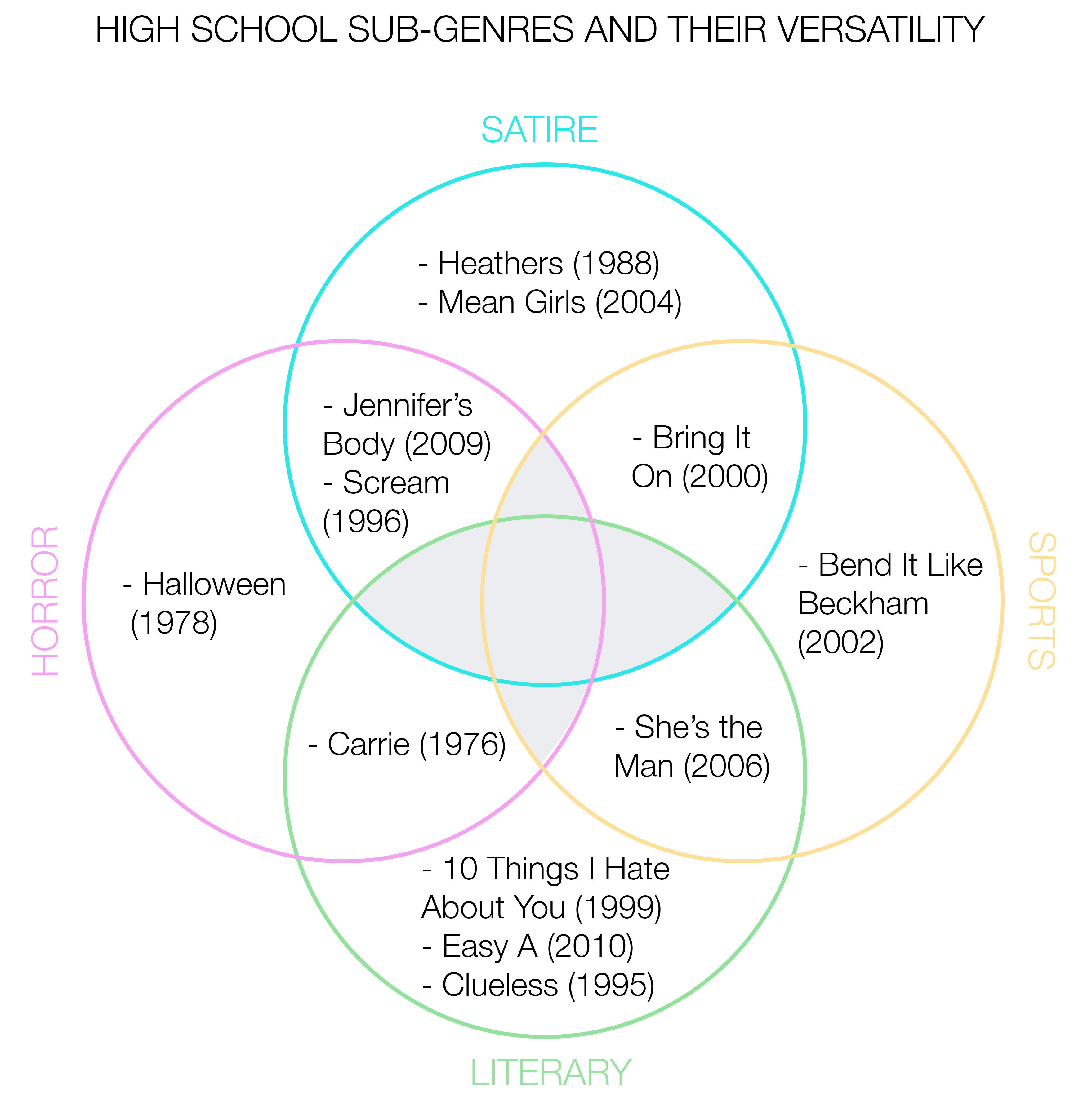
I’m leaving out classics and could easily add other sub-genres (romance - To All the Boys I’ve Loved Before, friendship - Lady Bird, musicals - Grease, High School Musical), but to be honest, I couldn’t figure out how a six circle Venn Diagram worked. Regardless, consider it proof of the endless versatility of this genre, which helps explain how it continues to persist, even as adjacent genres like the rom-com and sex comedy have dropped off.
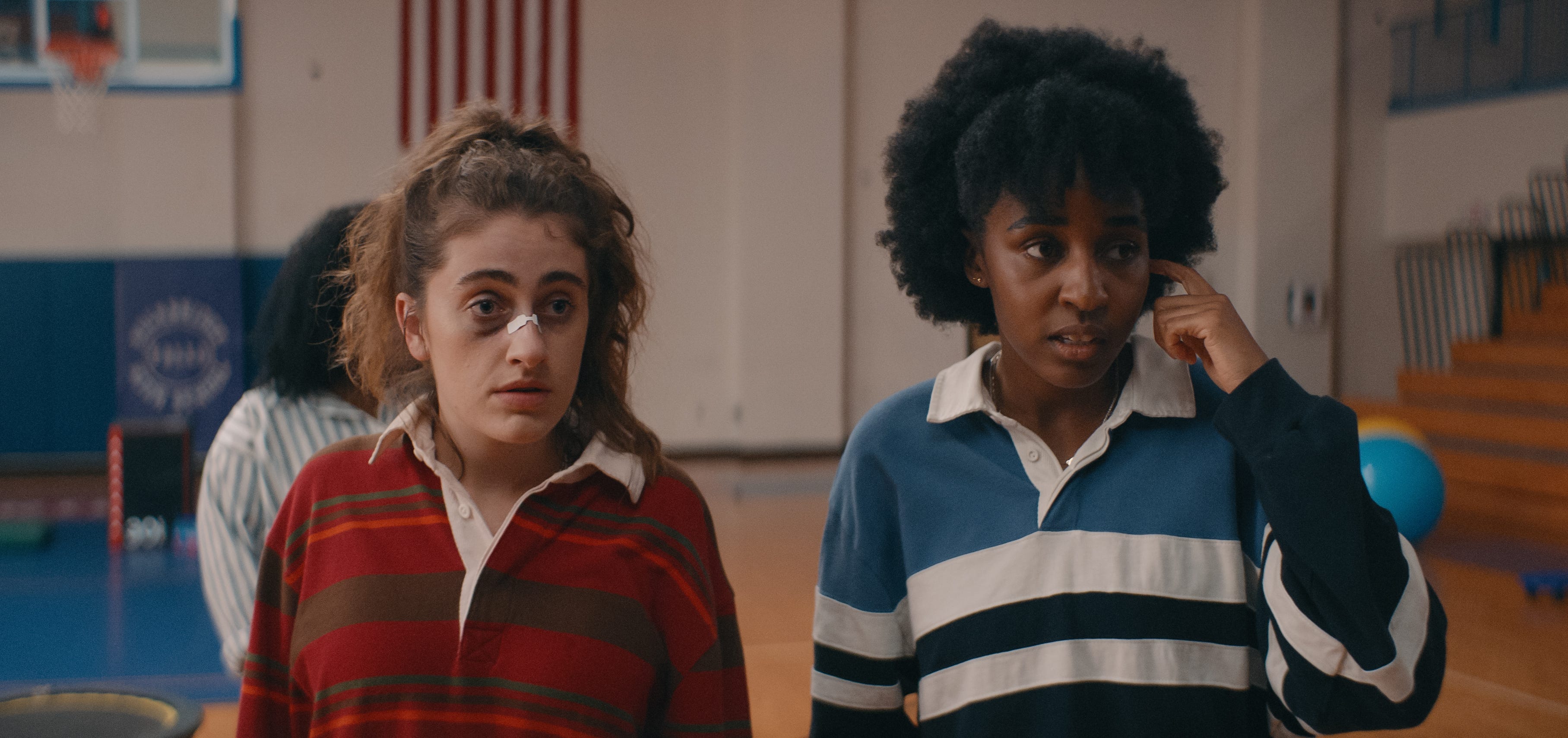
The film that inspired this newsletter, Bottoms, is a recent release that reaffirms the high school movie’s place in culture. Rachel Sennott and Ayo Edebiri star, playing queer high schoolers who start a fight club to get closer to their crushes. If I had to place this movie on my own Venn Diagram, I’d say it’s a satire + sports movie with some horror and sex comedy elements— think Heathers meets Booksmart meets Bend It Like Beckham, but the sport is… fighting and gay love?
There’s no doubt that Bottoms owes a lot to its predecessors. There’s a plot line with a homemade bomb that speaks clearly to Heathers, an endearing portrayal of queer teenage romance that reminds me of Booksmart, and plenty of other iconic high school tropes (football teams, party anxiety, general concerns about getting laid and being cool). This is a movie that’s conscious of its debts, but manages to be fresh anyway. The Gen-Z-ish bend to its humor feels new, so even if all the ingredients are familiar, the result is surprising, exciting.
Something that Bottoms showcases is that the high school genre is not only ripe for subversion but also has its subversiveness built in. Since leaving behind the sincerity of the John Hughes era, this genre has continually reinvented itself, both playing off of our expectations of what these films typically look like and distorting, reflecting, and subverting our own real-life experiences of high school. Consider how 10 Things I Hate About You takes Shakespeare’s most misogynistic play and makes it a feminist romance or how Mean Girls takes on clique culture with its own Goodfellas rise-and-fall story.
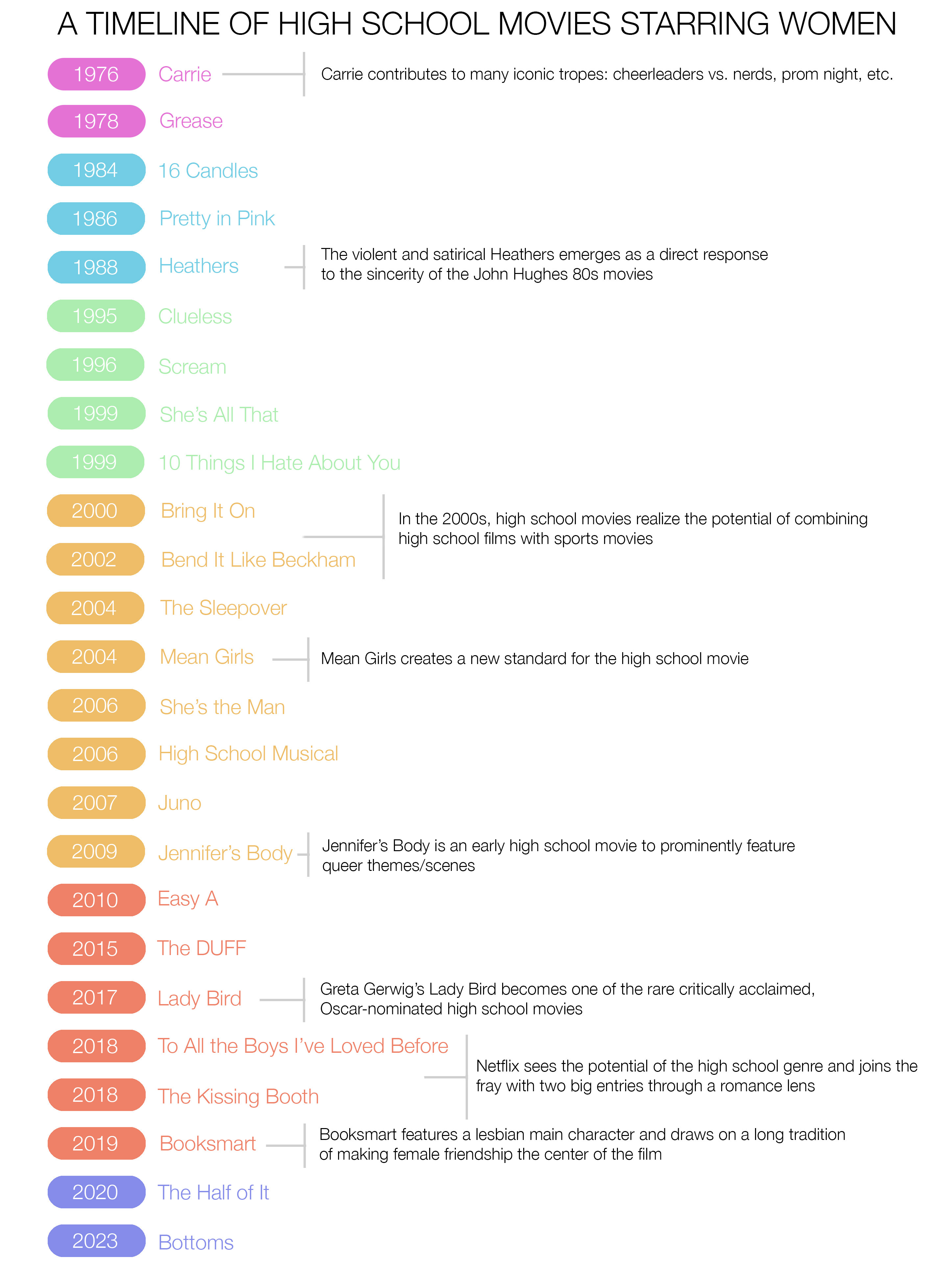
Bottoms is a product of this tradition, and in line with many of the films it’s drawing upon, it announces its leads (and its director, Emma Seligman) as future stars. Adaptation and evolution might be built-in to this genre’s past and future, but it’s comforting to see that the high school movie remains a springboard for young actresses to showcase their acting chops, both comedic and dramatic. Some things, it seems, never change.
Culture Crumbs
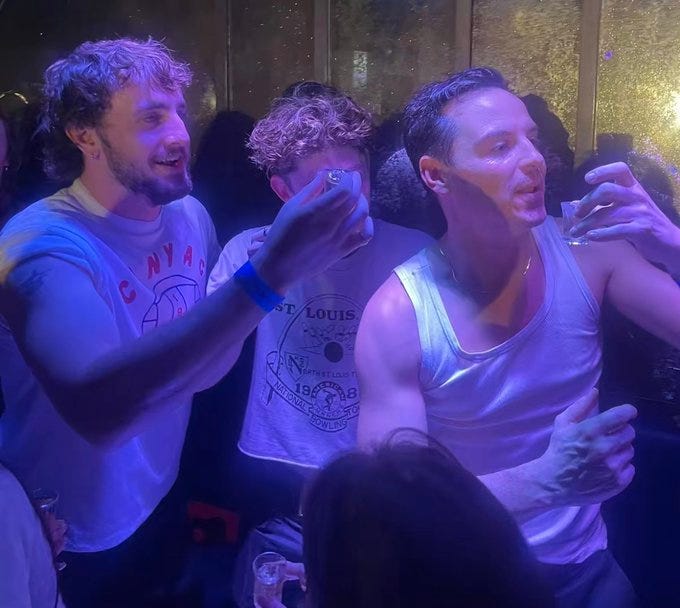
Thought my fellow Fleabag fans would appreciate Andrew Scott celebrating his birthday with Paul Mescal at a bar

as Fleabag would say… his ARMS
This Nicolas Cage interview with the New York Times, promoting his latest role in A24’s Dream Scenario (which has a SAG-AFTRA interim agreement)
Michelle Williams’ savage impression of Justin Timberlake as part of the audiobook of Britney Spears’ memoir The Woman in Me
Anatomy of a Fall, the Palme D’or winner at Cannes this year— one of the best films I’ve seen this year. It’s a courtroom drama… and much, much more. If you can see it in theaters, it’s worth it!
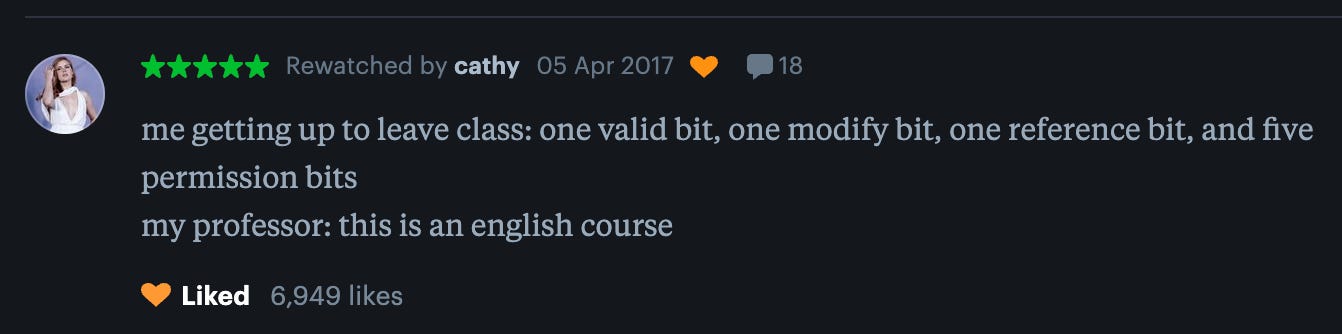
After a comfort rewatch of The Social Network, this Letterboxd review

That’s it for this week! Thank you for reading and please consider subscribing if you haven’t already (it’s free)!